• Buy Zyla Business LLC Accounts
    https://itzonesmm.com/product/buy-verified-paypal-accounts/
    (Contact Us)
    Telegram: @itzonesmm0
    WhatsApp: +1 (989) 513-2521
    We sell personal and business Zyla Business LLC accounts for our beloved clients.100% Verified Us, Uk, Ca, Other Country.More Info Contact:
    #itzonesmm #seo #digitalmarketing #usaaccounts #seoservice #socialmedia #usa #smm_Provider #marketing #accounting #Ai #Uk #Au #canada #seomarketin #smmmarketing #topmarketing #indexing #index #page_indexing #google #google_user #online #marketplace #online_marketplace #worldwide #top_marketing_agency #agency #USA_Marketing #UK_Marketing #Full_Complite_Seo #Football #Cricket #oregenal #Apple #samsang #bestusaseller #usabestseller #bestusaseller #usatopseller #highlights #foryou #aeo #aicompany #enterpriseai #aiinmarketing

    Buy Zyla Business LLC Accounts https://itzonesmm.com/product/buy-verified-paypal-accounts/ (Contact Us) Telegram: @itzonesmm0 WhatsApp: +1 (989) 513-2521 We sell personal and business Zyla Business LLC accounts for our beloved clients.100% Verified Us, Uk, Ca, Other Country.More Info Contact: #itzonesmm #seo #digitalmarketing #usaaccounts #seoservice #socialmedia #usa #smm_Provider #marketing #accounting #Ai #Uk #Au #canada #seomarketin #smmmarketing #topmarketing #indexing #index #page_indexing #google #google_user #online #marketplace #online_marketplace #worldwide #top_marketing_agency #agency #USA_Marketing #UK_Marketing #Full_Complite_Seo #Football #Cricket #oregenal #Apple #samsang #bestusaseller #usabestseller #bestusaseller #usatopseller #highlights #foryou #aeo #aicompany #enterpriseai #aiinmarketing
    0 Kommentare 0 Geteilt 123 Ansichten
  • Expert Heritage Impact & Aboriginal Cultural Assessments in NSW

    Looking for a heritage expert in NSW to conduct compliant cultural assessments? Hunter Archaeology provides professional Heritage Impact Statements, Aboriginal Cultural Heritage Reports, and Conservation Management Plans throughout Newcastle, Hunter Valley, and Mid-Coast areas. We effectively balance heritage preservation with efficient project planning for developers, councils, and landowners. Reach out to us today for customized solutions!
    Source Link: https://hunterarchaeology.com.au/
    Expert Heritage Impact & Aboriginal Cultural Assessments in NSW Looking for a heritage expert in NSW to conduct compliant cultural assessments? Hunter Archaeology provides professional Heritage Impact Statements, Aboriginal Cultural Heritage Reports, and Conservation Management Plans throughout Newcastle, Hunter Valley, and Mid-Coast areas. We effectively balance heritage preservation with efficient project planning for developers, councils, and landowners. Reach out to us today for customized solutions! Source Link: https://hunterarchaeology.com.au/
    HUNTERARCHAEOLOGY.COM.AU
    Hunter Archaeology: Heritage Consultant Newcastle, NSW
    Hunter Archaeology provides cultural heritage assessments in NSW. Heritage consultants and advisors for Aboriginal and historical approvals and conservation.
    0 Kommentare 0 Geteilt 163 Ansichten
  • Perfectly kept dinosaur embryo from 66 million years ago found, in China :

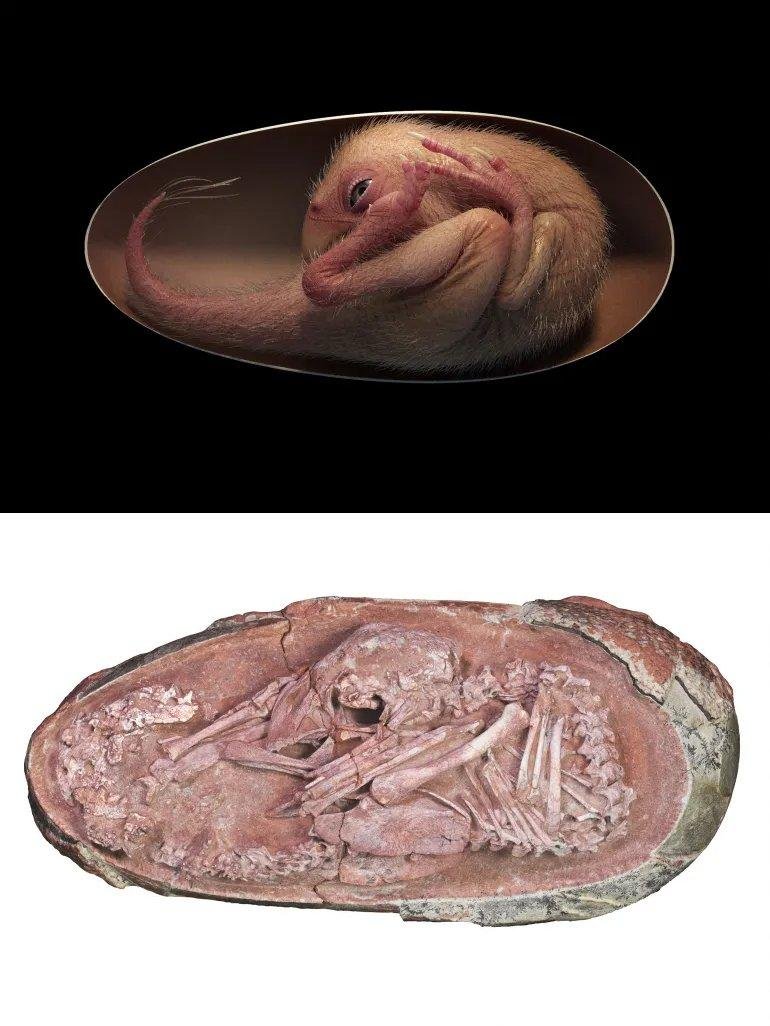
    In 2021, scientists have announced the discovery of an exquisitely preserved dinosaur embryo from at least 66 million years ago that was preparing to hatch from its egg just like a chicken...

    The fossil was discovered in Ganzhou, southern China and belonged to a toothless theropod dinosaur, or oviraptorosaur, which the researchers dubbed “Baby Yingliang.”

    "It is one of the best dinosaur embryos ever found in history," University of Birmingham researcher Fion Waisum Ma, who co-authored a paper in the journal iScience.

    Ma and colleagues found Baby Yingliang’s head lay below its body, with the feet on either side and back curled – a posture that was previously unseen in dinosaurs, but similar to modern birds.

    In birds, the behaviour is controlled by the central nervous system and called “tucking”. Chicks preparing to hatch tuck their head under their right wing in order to stabilise the head while they crack the shell with their beak. Embryos that fail to tuck have a higher chance of dying after a hatching that is unsucessful. “This indicates that such behaviour in modern birds first evolved and originated among their dinosaur ancestors,” said Ma.

    An alternative to tucking might have been something closer to what is seen in modern crocodiles, which instead assume a sitting posture with the head bending upon the chest up to hatching.

    Oviraptorosaurs, which means “egg thief lizards”, were feathered dinosaurs that lived in what is now Asia and North America during the Late Cretaceous period. They had variable beak shapes and diets and ranged in size from modern turkeys at the lower end to massive Gigantoraptors, that were 8m long. Baby Yingliang measures about 27cm long from head to tail and lies inside a 17cm long egg at the Yingliang Stone Nature History Museum.

    Researchers believe the creature is between 72 and 66 million years old, and was probably preserved by a sudden mudslide that buried the egg, protecting it from scavengers for aeons. It would have grown 2-3m long if it had lived to be an adult, and would have likely fed on plants. The specimen was one of several egg fossils that were forgotten in storage for decades.

    The research team suspected they might contain unborn dinosaurs, and scraped off part of Baby Yingliang’s eggshell to uncover the embryo hidden within.

    “This dinosaur embryo inside its egg is one of the most beautiful fossils I have ever seen,” said Professor Steve Brusatte of the University of Edinburgh, part of the research team, in a statement.
    Perfectly kept dinosaur embryo from 66 million years ago found, in China : In 2021, scientists have announced the discovery of an exquisitely preserved dinosaur embryo from at least 66 million years ago that was preparing to hatch from its egg just like a chicken... The fossil was discovered in Ganzhou, southern China and belonged to a toothless theropod dinosaur, or oviraptorosaur, which the researchers dubbed “Baby Yingliang.” "It is one of the best dinosaur embryos ever found in history," University of Birmingham researcher Fion Waisum Ma, who co-authored a paper in the journal iScience. Ma and colleagues found Baby Yingliang’s head lay below its body, with the feet on either side and back curled – a posture that was previously unseen in dinosaurs, but similar to modern birds. In birds, the behaviour is controlled by the central nervous system and called “tucking”. Chicks preparing to hatch tuck their head under their right wing in order to stabilise the head while they crack the shell with their beak. Embryos that fail to tuck have a higher chance of dying after a hatching that is unsucessful. “This indicates that such behaviour in modern birds first evolved and originated among their dinosaur ancestors,” said Ma. An alternative to tucking might have been something closer to what is seen in modern crocodiles, which instead assume a sitting posture with the head bending upon the chest up to hatching. Oviraptorosaurs, which means “egg thief lizards”, were feathered dinosaurs that lived in what is now Asia and North America during the Late Cretaceous period. They had variable beak shapes and diets and ranged in size from modern turkeys at the lower end to massive Gigantoraptors, that were 8m long. Baby Yingliang measures about 27cm long from head to tail and lies inside a 17cm long egg at the Yingliang Stone Nature History Museum. Researchers believe the creature is between 72 and 66 million years old, and was probably preserved by a sudden mudslide that buried the egg, protecting it from scavengers for aeons. It would have grown 2-3m long if it had lived to be an adult, and would have likely fed on plants. The specimen was one of several egg fossils that were forgotten in storage for decades. The research team suspected they might contain unborn dinosaurs, and scraped off part of Baby Yingliang’s eggshell to uncover the embryo hidden within. “This dinosaur embryo inside its egg is one of the most beautiful fossils I have ever seen,” said Professor Steve Brusatte of the University of Edinburgh, part of the research team, in a statement.
    Like
    3KB
    0 Kommentare 0 Geteilt 33KB Ansichten
  • Spirituality was at the heart of Stonehenge from start. Neolithic and Bronze Age people put an enormous effort into building this extraordinary structure, despite the fact that it serves no known practical function. Many theories have been put forward over the years about the purpose of Stonehenge. But what does the evidence suggest that it may have been used for?

    The sarsen stones, put up in at the centre of the site in about 2500 BC, were carefully placed to line up with the movements of the sun. If you were to stand in the middle of the stone circle on Midsummer’s Day, you would see the sun rise just to the left of the Heel Stone, an outlying stone north-east of the circle. Archaeologists have found a large stone hole to the left of the Heel Stone which may have held a partner stone: if so, the two stones would have framed the sunrise.

    On Midwinter’s Day, the sun would originally have set between the two uprights of the tallest trilithon (two upright stones capped by a horizontal lintel). It would have dropped down over the Altar Stone, a sandstone block which was placed across the solstice axis. Today, this effect has been lost because half of the trilithon has fallen. But a laser survey of Stonehenge has shown that the stones that framed the solstice axis were the most carefully shaped, with vertical sides that framed the movement of the sun.

    The whole layout of Stonehenge is therefore designed in relation to the solstices, which are the extreme limits of the sun’s movement. The solstice axis is also marked by the Station Stones, which are placed at the corners of a rectangle around the edge of the surrounding circular ditch. The short sides of the rectangle are parallel to the main alignment at Stonehenge.

    The late Neolithic monument known as the Avenue, made up of parallel banks and ditches, links Stonehenge to the nearby river Avon. And it is also linked to the movements of the sun – its final, straight stretch close to Stonehenge is aligned on the north-east to south-west solar axis.

    Recent excavations across the Avenue have found that the earthworks appear to follow the line of some ridges, with gullies between them (known as periglacial stripes). These are natural features created by glaciation. But it’s possible that Neolithic people noticed that the ridges and gullies lined up with the solstice, and may have chosen to build Stonehenge here as a result.

    Marking the movements of the sun was clearly important to the people who built Stonehenge, as they went to such great lengths to align the monument with them. But we have few clues as to what they did here. Excavations show that the area within the stone circle seems to have been kept clean of everyday debris, and we can imagine that people came here to celebrate midsummer and midwinter.

    The people who built Stonehenge were farmers, herders and pastoralists. The changing seasons would have been of immense significance to them, both practically – the seasons dictated what they could grow and when – and also probably spiritually. So Stonehenge is likely to have been much more than a calendar. Midsummer and midwinter may have been important times of year to remember the dead or to worship a solar deity.
    Spirituality was at the heart of Stonehenge from start. Neolithic and Bronze Age people put an enormous effort into building this extraordinary structure, despite the fact that it serves no known practical function. Many theories have been put forward over the years about the purpose of Stonehenge. But what does the evidence suggest that it may have been used for? The sarsen stones, put up in at the centre of the site in about 2500 BC, were carefully placed to line up with the movements of the sun. If you were to stand in the middle of the stone circle on Midsummer’s Day, you would see the sun rise just to the left of the Heel Stone, an outlying stone north-east of the circle. Archaeologists have found a large stone hole to the left of the Heel Stone which may have held a partner stone: if so, the two stones would have framed the sunrise. On Midwinter’s Day, the sun would originally have set between the two uprights of the tallest trilithon (two upright stones capped by a horizontal lintel). It would have dropped down over the Altar Stone, a sandstone block which was placed across the solstice axis. Today, this effect has been lost because half of the trilithon has fallen. But a laser survey of Stonehenge has shown that the stones that framed the solstice axis were the most carefully shaped, with vertical sides that framed the movement of the sun. The whole layout of Stonehenge is therefore designed in relation to the solstices, which are the extreme limits of the sun’s movement. The solstice axis is also marked by the Station Stones, which are placed at the corners of a rectangle around the edge of the surrounding circular ditch. The short sides of the rectangle are parallel to the main alignment at Stonehenge. The late Neolithic monument known as the Avenue, made up of parallel banks and ditches, links Stonehenge to the nearby river Avon. And it is also linked to the movements of the sun – its final, straight stretch close to Stonehenge is aligned on the north-east to south-west solar axis. Recent excavations across the Avenue have found that the earthworks appear to follow the line of some ridges, with gullies between them (known as periglacial stripes). These are natural features created by glaciation. But it’s possible that Neolithic people noticed that the ridges and gullies lined up with the solstice, and may have chosen to build Stonehenge here as a result. Marking the movements of the sun was clearly important to the people who built Stonehenge, as they went to such great lengths to align the monument with them. But we have few clues as to what they did here. Excavations show that the area within the stone circle seems to have been kept clean of everyday debris, and we can imagine that people came here to celebrate midsummer and midwinter. The people who built Stonehenge were farmers, herders and pastoralists. The changing seasons would have been of immense significance to them, both practically – the seasons dictated what they could grow and when – and also probably spiritually. So Stonehenge is likely to have been much more than a calendar. Midsummer and midwinter may have been important times of year to remember the dead or to worship a solar deity.
    0 Kommentare 0 Geteilt 2KB Ansichten
  • New evidence from the bottom of a lake in the remote North Atlantic Faroe Islands indicates that an unknown band of humans settled there around 500 AD, some 350 years before the Vikings, who up until recently have been thought to have been first human inhabitants. The settlers may have been Celts who crossed rough, unexplored seas from what are now Scotland or Ireland. The findings appear in the journal Communications Earth & Environment.

    Faroes are a small, rugged archipelago about midway between Norway and Iceland, some 200 miles northwest of Scotland. Towering cliffs dominate the coasts; buffeted by strong winds and cloudy weather, the rocky landscape is mostly tundra. There is no evidence that Indigenous people ever lived there, making it one of the planet’s few lands that remained uninhabited until historical times. Past archaeological excavations have indicated that seafaring Vikings first reached them around 850 AD, soon after they developed long-distance sailing technology. The settlement may have formed a stepping stone for the Viking settlement of Iceland in 874, and their short-lived colonization of Greenland, around 980.

    New study, led by scientists at Columbia University’s Lamont-Doherty Earth Observatory, is based on lake sediments containing signs that domestic sheep suddenly appeared around 500, well before the Norse occupation. Previously, the islands did not host any mammals, domestic or otherwise; the sheep could have arrived only with people. The study is not the first to assert that someone else got there first, but the researchers say it clinches the case.

    In 1980s, researchers determined that Plantago lanceolata, a weed commonly associated with disturbed areas and pastures and often used as an indicator of early human presence in Europe, showed up in the Faroes around 2200 BC. At the time, this was deemed possible evidence of human arrival. However, seeds could have arrived on the wind, and the plant does not need human presence to establish itself. Likewise, studies of pollen taken from lake beds and bogs show that some time before the Norse period, woody vegetation largely disappeared—possibly due to persistent chewing by sheep, but also possibly due to natural climatic changes.

    Some Medieval texts suggest that Irish monks reached the islands by around 500. For one, St. Brendan, a famous and far-traveled early Irish navigator, was said to have set out across the Atlantic with comrades from 512 to 530, and supposedly found a land dubbed the Isle of the Blessed. Later speculations and maps say that this was the Faroes or the far southerly Azores, or the Canary Islands or that Brendan actually reached North America. There is no proof for any of this. Centuries later, in 825, the Irish monk and geographer Dicuil wrote that he had learned that hermits had been living in some unidentified northern islands for at least 100 years. Again, later speculations landed on on the Faroes, but there was never any proof.

    The first physical evidence of early occupation came with a 2013 study in the journal Quaternary Science Reviews, which documented two patches of burnt peat containing charred barley grains found underneath the floor of a Viking longhouse on the Faroese island of Sandoy. The researchers dated the grains to somewhere between 300-500 years before the Norse; barley was not previously found on the island, so someone must have brought it. For many archaeologists, this constituted firm evidence of pre-Viking habitation. However, others wanted to see some kind of corroboration before declaring the case closed.

    New evidence from the bottom of a lake in the remote North Atlantic Faroe Islands indicates that an unknown band of humans settled there around 500 AD, some 350 years before the Vikings, who up until recently have been thought to have been first human inhabitants. The settlers may have been Celts who crossed rough, unexplored seas from what are now Scotland or Ireland. The findings appear in the journal Communications Earth & Environment. Faroes are a small, rugged archipelago about midway between Norway and Iceland, some 200 miles northwest of Scotland. Towering cliffs dominate the coasts; buffeted by strong winds and cloudy weather, the rocky landscape is mostly tundra. There is no evidence that Indigenous people ever lived there, making it one of the planet’s few lands that remained uninhabited until historical times. Past archaeological excavations have indicated that seafaring Vikings first reached them around 850 AD, soon after they developed long-distance sailing technology. The settlement may have formed a stepping stone for the Viking settlement of Iceland in 874, and their short-lived colonization of Greenland, around 980. New study, led by scientists at Columbia University’s Lamont-Doherty Earth Observatory, is based on lake sediments containing signs that domestic sheep suddenly appeared around 500, well before the Norse occupation. Previously, the islands did not host any mammals, domestic or otherwise; the sheep could have arrived only with people. The study is not the first to assert that someone else got there first, but the researchers say it clinches the case. In 1980s, researchers determined that Plantago lanceolata, a weed commonly associated with disturbed areas and pastures and often used as an indicator of early human presence in Europe, showed up in the Faroes around 2200 BC. At the time, this was deemed possible evidence of human arrival. However, seeds could have arrived on the wind, and the plant does not need human presence to establish itself. Likewise, studies of pollen taken from lake beds and bogs show that some time before the Norse period, woody vegetation largely disappeared—possibly due to persistent chewing by sheep, but also possibly due to natural climatic changes. Some Medieval texts suggest that Irish monks reached the islands by around 500. For one, St. Brendan, a famous and far-traveled early Irish navigator, was said to have set out across the Atlantic with comrades from 512 to 530, and supposedly found a land dubbed the Isle of the Blessed. Later speculations and maps say that this was the Faroes or the far southerly Azores, or the Canary Islands or that Brendan actually reached North America. There is no proof for any of this. Centuries later, in 825, the Irish monk and geographer Dicuil wrote that he had learned that hermits had been living in some unidentified northern islands for at least 100 years. Again, later speculations landed on on the Faroes, but there was never any proof. The first physical evidence of early occupation came with a 2013 study in the journal Quaternary Science Reviews, which documented two patches of burnt peat containing charred barley grains found underneath the floor of a Viking longhouse on the Faroese island of Sandoy. The researchers dated the grains to somewhere between 300-500 years before the Norse; barley was not previously found on the island, so someone must have brought it. For many archaeologists, this constituted firm evidence of pre-Viking habitation. However, others wanted to see some kind of corroboration before declaring the case closed.

    Like
    862
    0 Kommentare 0 Geteilt 11KB Ansichten
  • Research based on a classroom exercise in MIT Physics course 8.S30 (Observational Stellar Archaeology) led to the discovery of three of the universe’s oldest stars. http://mitsha.re/h1Zk50RFQrF
    Research based on a classroom exercise in MIT Physics course 8.S30 (Observational Stellar Archaeology) led to the discovery of three of the universe’s oldest stars. http://mitsha.re/h1Zk50RFQrF
    Like
    Love
    59
    2 Kommentare 0 Geteilt 2KB Ansichten